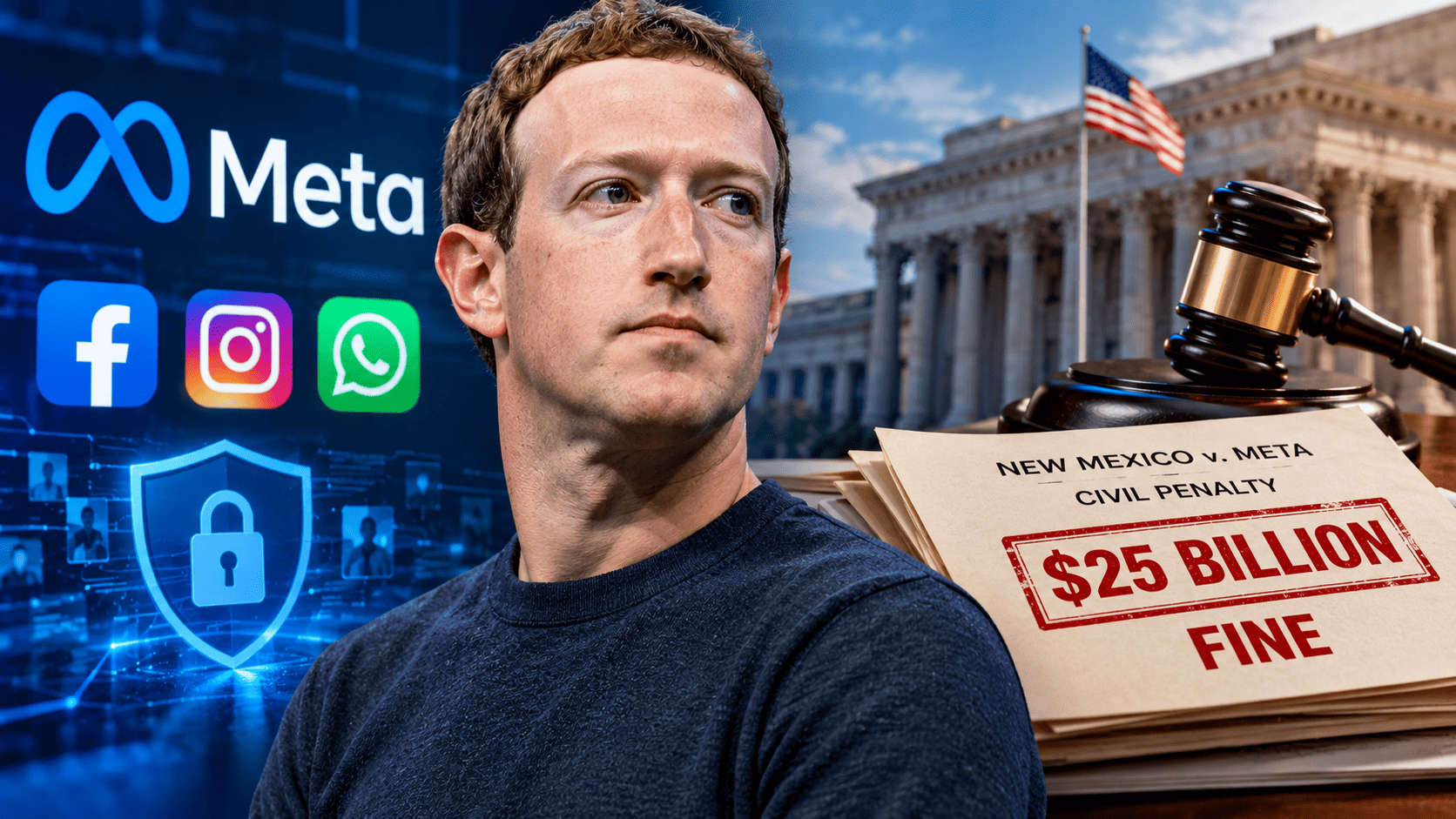
Meta Fined $25 Billion: What the Facebook Privacy Case Means for Users
Meta Fined $25 Billion: What the Facebook Privacy Case Means for Users
Published: October 22, 2026
A major legal development in the technology industry has brought data privacy back into the spotlight. Meta Platforms, the parent company of Facebook and Instagram, has been ordered by a New Mexico judge in the United States to pay $25 billion in civil penalties following a lawsuit over Facebook’s privacy practices and statements made to consumers.
The ruling, announced on October 21, 2026, follows a jury verdict finding that Facebook made misleading statements about user privacy and other platform policies. Meta has disputed the outcome and plans to appeal.
The case is connected to the Cambridge Analytica scandal, which raised international concerns about how social media companies collect, share and protect personal information.
But what exactly happened, why is the penalty so large, and what does this mean for everyday internet users? Let’s explore the details.
What Is the Meta $25 Billion Fine Case?
The case was brought by the New Mexico Department of Justice against Meta Platforms, focusing on Facebook’s handling of personal information and representations about its privacy protections.
The state’s lawsuit alleged that Facebook misled consumers about who could access their personal data and how the company addressed harmful content, misinformation and hate speech.
According to Reuters, a jury found in September 2026 that 26 of 29 statements examined during the case were misleading. The jury identified 43,899,725 violations of New Mexico’s consumer protection law.
On October 21, 2026, Judge Francis Mathew ordered Meta to pay $25 billion in civil penalties.
The amount is exceptionally large because the state’s law permits penalties for individual violations. Although a much higher potential penalty was considered, the judge set the final amount at $25 billion.
Important: Meta has said it intends to appeal the ruling, so the legal dispute may continue.
Sources: Reuters report | New Mexico Department of Justice
What Is the Cambridge Analytica Scandal?
To understand why the current case matters, it is necessary to look back at the Cambridge Analytica scandal, which became widely known in 2018.
Cambridge Analytica was a political consulting firm that obtained Facebook user information through a third-party application. Reports indicated that personal data associated with as many as 87 million Facebook users was affected.
The data was collected through an app that allowed access to information from users and, under the platform’s then-existing rules, certain information about their friends.
The incident raised serious concerns about whether people understood how their personal information could be accessed and used.
It also sparked international discussions about the responsibilities of social media platforms, the transparency of data collection practices and the potential use of personal information for political profiling.
Facebook faced significant regulatory scrutiny following the revelations. In 2019, the US Federal Trade Commission announced a $5 billion settlement with Facebook over privacy-related violations.
The New Mexico case revisits broader questions about the company’s privacy representations and practices, rather than simply treating the original Cambridge Analytica incident as the entire case.
Why Did New Mexico Take Legal Action Against Meta?
New Mexico’s lawsuit focused on consumer protection and the information Facebook provided to its users.
The state’s allegations included several major concerns.
1. Statements About User Privacy
The state argued that Facebook’s statements gave consumers an inaccurate understanding of how their personal information was handled and who could access it.
Users often share photos, contact information, personal interests and other details with the expectation that the platform’s privacy controls will work as described.
The case examined whether Facebook’s public statements accurately reflected its practices.
2. Third-Party Access to Personal Information
Third-party applications can provide additional features and services on social media platforms. However, these integrations can create privacy risks when applications receive more information than users expect or when data is not properly protected.
The Cambridge Analytica controversy highlighted how information obtained through an application could be used beyond what many users understood or anticipated.
3. Handling Misinformation and Harmful Content
The lawsuit also examined statements about Facebook’s policies for addressing misinformation, hate speech and other harmful content.
New Mexico argued that the company’s representations about these protections were misleading.
These issues formed part of the wider consumer protection case, alongside questions about personal data.
Why Is the $25 Billion Penalty So High?
One of the most striking aspects of the ruling is the size of the financial penalty.
New Mexico law allows civil penalties of up to $5,000 for each violation of the state’s consumer protection law. The jury identified more than 43 million violations.
The potential maximum penalty calculated from the number of violations was substantially higher than the amount ultimately ordered by the judge.
The judge set the penalty at $25 billion after considering the case and the relevant legal factors.
The state has said that the penalties will go to New Mexico’s school system.
The ruling demonstrates how a consumer protection law can have significant financial consequences when a court finds that a company has committed a large number of violations.
However, the amount ordered does not mean that every Facebook user worldwide will receive compensation. The case concerns violations of New Mexico law, and the money is intended for the state rather than being automatically distributed to all Facebook users.
Does Meta Sell Facebook Users’ Personal Data?
This question requires an important distinction.
The allegations about unauthorized third-party access to Facebook data do not establish that Meta sells every user’s personal information.
Social media companies can collect and process information to provide services, personalize content and deliver advertising. These activities are different from directly selling personal information to another company.
The New Mexico case focused on allegations about Facebook’s privacy representations, third-party access and other platform policies. Meta disputed the state’s claims.
Users should therefore distinguish between the specific findings in this case and broader claims about how every type of personal information is handled.
For anyone using social media, the practical lesson is to understand what information an application requests, which permissions have been granted and how data may be used.
How Does This Case Affect Facebook and Instagram Users?
Although the lawsuit was brought in the United States, its broader implications are relevant to people who use social media around the world, including in Sri Lanka.
Review Your App Permissions
Check which applications and websites have access to your Facebook account. Remove access for services you no longer use or do not recognize.
Be Careful About Third-Party Apps
Avoid granting unnecessary permissions to quizzes, games and unfamiliar applications that request access to your social media profile.
Before connecting an app to your account, consider whether the requested information is genuinely necessary for its features.
Limit the Personal Information You Share
Think carefully before publicly sharing your phone number, home address, workplace details, travel plans or other sensitive information.
Information shared online can sometimes be copied, stored or redistributed beyond the audience you originally intended.
Check Your Privacy Settings
Review who can see your posts, who can find your profile, and how your information may be used for advertising or recommendations.
Privacy settings cannot eliminate every risk, but they can help you make more informed decisions about what you share.
Enable Two-Factor Authentication
Two-factor authentication adds another layer of security to your account by requiring an additional verification step when signing in.
Use a strong, unique password and never share verification codes with other people.
What Has Meta Said About the Ruling?
Meta has disagreed with the outcome and indicated that it plans to appeal.
An appeal allows a higher court to review relevant legal issues and determine whether the ruling should stand or be changed. The appeal process may affect the final outcome of the case.
For this reason, the $25 billion figure should be described as the penalty ordered by the judge, rather than assuming that all legal proceedings are finished or that the amount can never change.
Readers should follow reliable news organizations and official court announcements for further developments.
Could This Case Change the Technology Industry?
The ruling could become an important reference point in discussions about consumer protection and accountability in the technology industry.
Greater Pressure for Transparency
Technology companies may face continued pressure to explain their data collection practices clearly and ensure that public privacy statements match their actual operations.
More Attention to Third-Party Applications
Platforms that allow external applications to access user information may face greater scrutiny over permissions, data sharing and the monitoring of third-party services.
Stronger Consumer Protection Enforcement
The case highlights the role that state authorities can play in investigating and challenging potentially misleading business practices.
Privacy as a Business Priority
For technology companies, privacy is not only a technical issue. It can also affect customer trust, regulatory compliance and long-term business reputation.
The ultimate impact of this particular ruling will depend on the outcome of further legal proceedings and how regulators and courts apply similar laws in future cases.
Frequently Asked Questions (FAQs)
1. Why was Meta ordered to pay $25 billion?
A New Mexico judge ordered Meta to pay $25 billion after a jury found that Facebook had made misleading statements concerning user privacy and other platform policies, resulting in violations of the state’s consumer protection law.
2. What is the Cambridge Analytica scandal?
The Cambridge Analytica scandal involved the collection and use of Facebook user information through a third-party application. The incident became widely known in 2018 and raised concerns about privacy, political profiling and the use of personal data.
3. Did the case involve Instagram and WhatsApp?
The $25 billion penalty discussed here concerns the New Mexico case against Facebook. Meta also owns Instagram and WhatsApp, but the specific findings and penalty in this case should not automatically be attributed to every service owned by Meta.
4. Will Facebook users receive compensation?
The $25 billion penalty is intended for New Mexico, including its school system, rather than being automatically distributed to individual Facebook users. Any separate compensation claim would depend on the relevant legal proceedings.
5. Has Meta paid the $25 billion fine?
The judge ordered the payment on October 21, 2026, and Meta has said it plans to appeal. The final outcome and payment status may change as the legal process continues.
6. Is Facebook safe to use?
No online platform is completely free of privacy or security risks. Users can reduce some risks by reviewing permissions, limiting personal information sharing, using strong passwords and enabling two-factor authentication.
7. Does this case affect Facebook users in Sri Lanka?
The ruling concerns New Mexico law and does not automatically create the same legal outcome in Sri Lanka. However, the privacy and security lessons are relevant to Sri Lankan users and other people who use social media internationally.
Conclusion
The $25 billion penalty ordered against Meta in New Mexico is a major development in the ongoing debate over online privacy and technology company accountability.
The case, linked to the broader Cambridge Analytica controversy, highlights the importance of truthful privacy statements, responsible data handling and transparent relationships between platforms and their users.
Meta intends to appeal, so the legal process is not necessarily over. Nevertheless, the case provides an important reminder that personal data deserves careful protection.
For everyday users, the best practical steps are to understand app permissions, review privacy settings and share personal information thoughtfully.
As social media continues to influence communication, business and everyday life, protecting personal information remains a shared responsibility involving technology companies, regulators and users.
Stay informed about technology, cybersecurity and digital privacy with gihanchathuranga.com.
Sources and Further Reading
- Reuters — Meta ordered to pay $25 billion in New Mexico privacy case
- New Mexico Department of Justice — Official announcement
- Reuters — New Mexico jury finds Meta misled users about Facebook data practices
- Federal Trade Commission — Facebook’s $5 billion privacy settlement in 2019
Editorial note: This article is based on reports available as of October 22, 2026. The penalty is subject to further legal proceedings, and the article may need updating when new court decisions are announced.